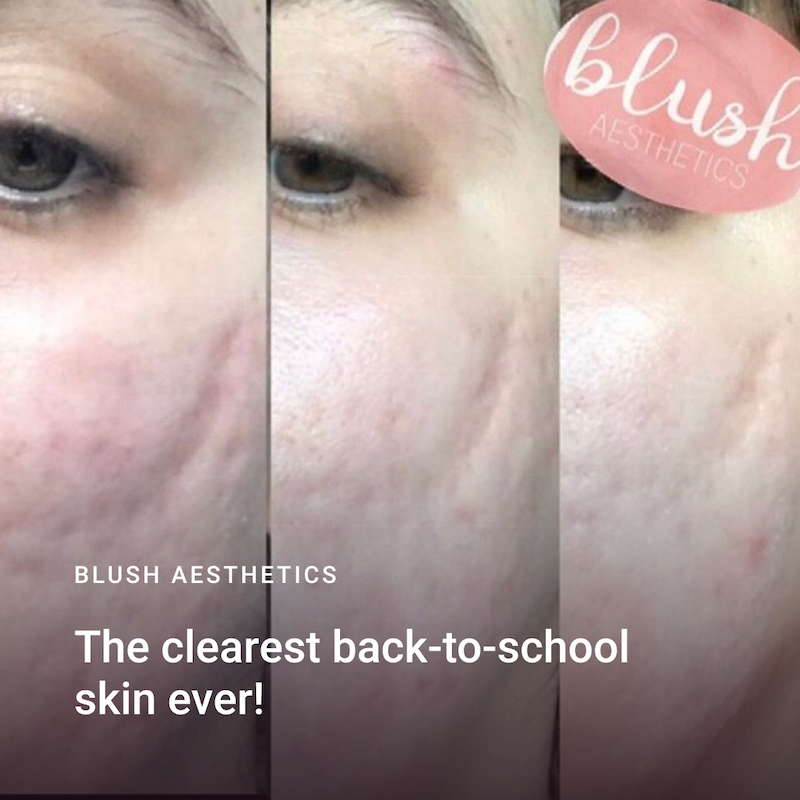
Months of sunny weekends, a recurring breakout, or a stretch of hormonal changes can leave behind all-too-visible dark spots. Maybe you’ve tried brightening serums and extra concealer, only to feel like the same spots keep showing up in the mirror.
The truth is that hyperpigmentation and its causes have many layers, so it rarely responds to one simple fix.
At Blush Aesthetics, we create custom hyperpigmentation treatments in Columbus for patients who want to reclaim their vibrance. Under the guidance of our founder, Erin Hennessey, our providers use advanced techniques to study your discoloration and create a treatment strategy that fits you.
Jump ahead to hyperpigmentation topics
Keep reading to discover types of hyperpigmentation, or skip ahead using our table of contents.
- What is hyperpigmentation?
- What causes hyperpigmentation?
- When should I see a provider for hyperpigmentation?
- Your options for hyperpigmentation treatment
- Can hyperpigmentation come back after treatment?
What is hyperpigmentation?
Hyperpigmentation is extra pigment in the skin that appears as dark spots, areas of discoloration, or an uneven complexion.
Melanin gives your skin its natural color. When your skin produces more melanin in certain areas, that pigment can cluster together, creating spots that look darker than the skin around them.
Hyperpigmentation looks different from person to person. Depending on your skin tone and what triggered the excess pigment, these areas of discoloration may appear brown, black, gray, red, or pink. Some patients notice tiny spots that look like freckles, while others see larger patches across their cheeks, forehead, or upper lip.
Because pigment can show up in different ways, we begin our hyperpigmentation treatments in Columbus by understanding what kind of discoloration you have. Once our providers understand the pattern and possible cause of your dark spots, we can choose a treatment path that brings your glow back into focus.
What causes hyperpigmentation?
Your skin is unique, and so is your discoloration. Just like wrinkle treatments work best when providers understand how and why lines form, dark spots may look similar at first glance but respond differently to hyperpigmentation treatment.
In Columbus, our specialists often see these common causes of hyperpigmentation:
Sun exposure
Frequent or extended UV exposure can trigger extra melanin production, leading to sun spots, brown patches, and uneven tone.
Pigment from sun damage often becomes more noticeable over time, especially after repeated tanning or sunburns. This is why our providers recommend consistent sun care, even when you are not actively treating dark spots.
Hormonal changes
Melasma often appears as larger patches of discoloration, especially on the cheeks, forehead, or upper lip. Because this concern may flare with hormonal shifts, heat, or sun exposure, it usually needs a careful long-term plan.
Acne and inflammation
Breakouts can leave behind post-inflammatory hyperpigmentation (PIH) after an active blemish has calmed down. Picking or irritation can make those marks darker and more stubborn, which feels especially frustrating when your skin finally starts to clear.
Age-related pigment changes
As your skin changes over time, old sun exposure and slower cellular renewal can make discoloration more visible. These spots may develop gradually, so many patients notice them once their overall tone starts looking less even.
Skin sensitivity or irritation
Over-exfoliation, harsh products, or treatments that do not fit your skin might make pigment more noticeable. The wrong approach can leave sensitive skin looking more irritated, not more even.
After understanding the likely causes of your pigmentation, our providers help you decide whether your next treatment should include:
- New or improved daily skincare routines
- Professional, in-office treatments
- Some combination of both in-office and at-home care

When should I see a provider for hyperpigmentation?
You should see a provider for hyperpigmentation when you notice:
- New dark spots
- Changing discoloration
- Stubborn pigment that keeps coming back despite consistent skincare
Dark spots are usually just cosmetic, but they can sometimes reflect deeper skin changes from sun exposure and inflammation.
Some spots may need evaluation from a clinical dermatologist before aesthetic treatment, especially if they change quickly, look irregular, feel uncomfortable, or do not seem like your usual pigmentation.
You can also schedule a consultation if you don’t know what kind of pigment you have. Choosing the wrong product or procedure can waste time, frustrate your skin, or make discoloration more noticeable.
4 hyperpigmentation treatment options at Blush Aesthetics
Before we talk about specific treatments, we start with an overall strategy for hyperpigmentation treatment. In Columbus at Blush Aesthetics, we consider factors deeper than what you can see in the mirror.
Our skin specialists discuss your skin history, current skincare routine, and sun habits. When helpful, we also use VISIA skin analysis to get a clearer look at visible and underlying skin concerns.
From there, we recommend treatment options that match your skin type, hyperpigmentation type, and your comfort level. Blush Aesthetics offers everything from calming facials to more significant laser treatments, so your plan can support visible change at an intensity level you feel comfortable with.
1. BBL photofacial
What it treats: Rosacea, redness, sun spots, age spots, acne
A BBL photofacial uses broadband light, a form of light energy that targets visible pigment and redness in the skin.
Unlike laser treatments that use one wavelength of light, BBL uses multiple wavelengths to target multiple skin concerns in a single appointment, making it a strong option for patients with sun-related pigment or redness that cause an uneven complexion.
As part of your plan for hyperpigmentation treatment in Columbus, BBL warms unwanted pigment in the skin and helps break it apart. From there, your body’s natural renewal process moves treated pigment closer to the surface, where it may darken temporarily before shedding away and revealing clearer, healthier-looking skin.
2. MOXI
What it treats: Melasma, hyperpigmentation, sun spots, age spots
MOXI is a gentle, non-ablative laser that refreshes the skin without removing the uppermost layers of tissue. Because some discoloration reacts poorly to overly aggressive treatment, MOXI gives our providers a more gentle way to support your glow.
This strong option suits patients with early discoloration, mild sun damage, or melasma-prone areas.
MOXI delivers fractional laser energy into the skin to create microscopic channels and break apart unwanted pigment. During the healing process, treated pigment gradually moves toward the surface and fades as old, damaged cells shed away.
3. HALO & HALO TRIBRID
What it treats: Sun damage, facial redness, uneven skin tone
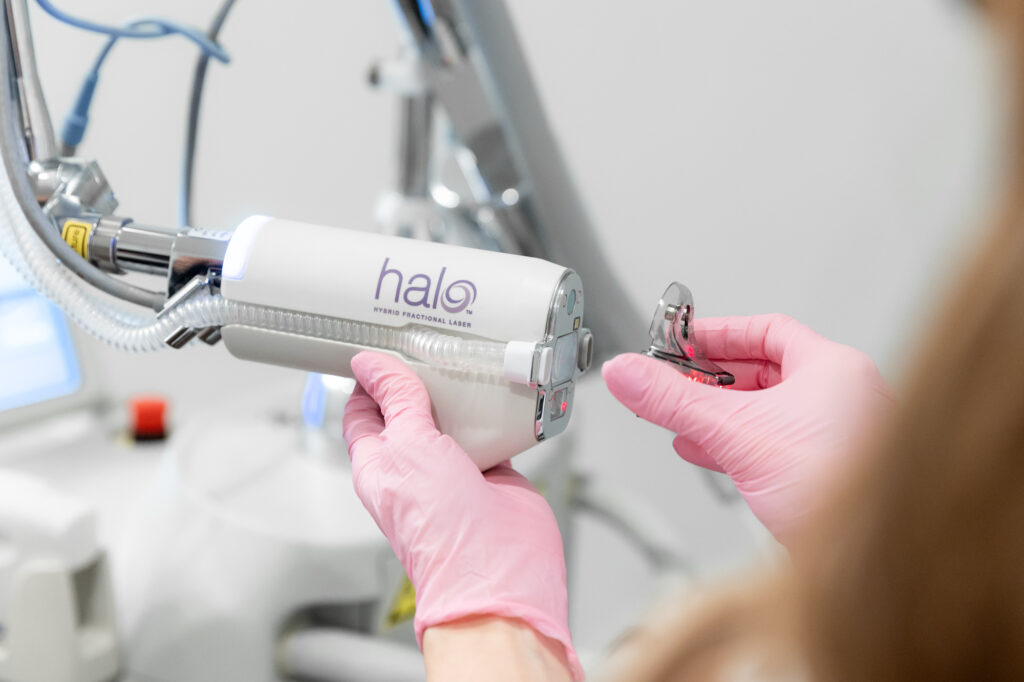
HALO uses hybrid fractional laser energy, which means it combines ablative and non-ablative wavelengths into a single treatment. HALO TRIBRID builds on that approach with triple-wavelength resurfacing for even more customization ability.
Because these treatments offer more intensive renewal, they may fit patients whose discoloration appears alongside texture changes, scarring, or more advanced sun damage.
As part of your personalized hyperpigmentation treatment in Columbus, HALO and HALO TRIBRID affect multiple tissue layers to target unwanted pigment. During the healing process, old surface cells and the treated dark spots gradually shed away, while deeper renewal supports a clearer tone and smoother texture.
4. Facials & chemical peels
What it treats: Uneven skin tone, hyperpigmentation, redness, inflammation, acne scars
Facials and chemical peels offer a less intensive way to refresh dull, uneven-looking skin. Treatments like DiamondGlow and our signature Glass Skin Facial support hydration, radiance, and surface-level brightness.
Professional chemical peels can lift dull surface cells and soften the look of mild discoloration, especially when pigment sits closer to the surface. Because peel depth and formula matter, our providers choose carefully to safely encourage clearer skin.
Can hyperpigmentation come back after treatment?
Yes, hyperpigmentation can come back after treatment if your skin keeps facing the same conditions that caused the discoloration. Many in-office treatments work by breaking down, fading, or resurfacing visible pigment, but repeated sun exposure, hormonal changes, or aging can restart the process over time.
That is why sun care and supportive skincare are non-negotiable.
At Blush Aesthetics, we recommend applying SPF 30+ every morning and reapplying every 2 hours. When you spend time outdoors, wear a hat for extra protection. These habits help protect your skin while your pigment fades and reduce the chance of new dark spots forming.
We also include skin health and maintenance as part of your plan from the beginning, not afterthoughts once your spots start to fade. Your provider may recommend medical-grade skincare to support your results at home and protect your glow between visits.

Start Building a Brighter Future
Ready to see brighter, more even-looking skin when you look in the mirror? Schedule your consultation for hyperpigmentation treatment in Columbus with Blush Aesthetics and meet a team dedicated to reviving your glow.
Not sure which treatment might work for your dark spots? Use our virtual consultation tool to answer a few simple questions and see which options our providers might recommend.